Anesthesia Assistant News
-
GLP-1
Short summary
-
Diabetes in Pregnancy
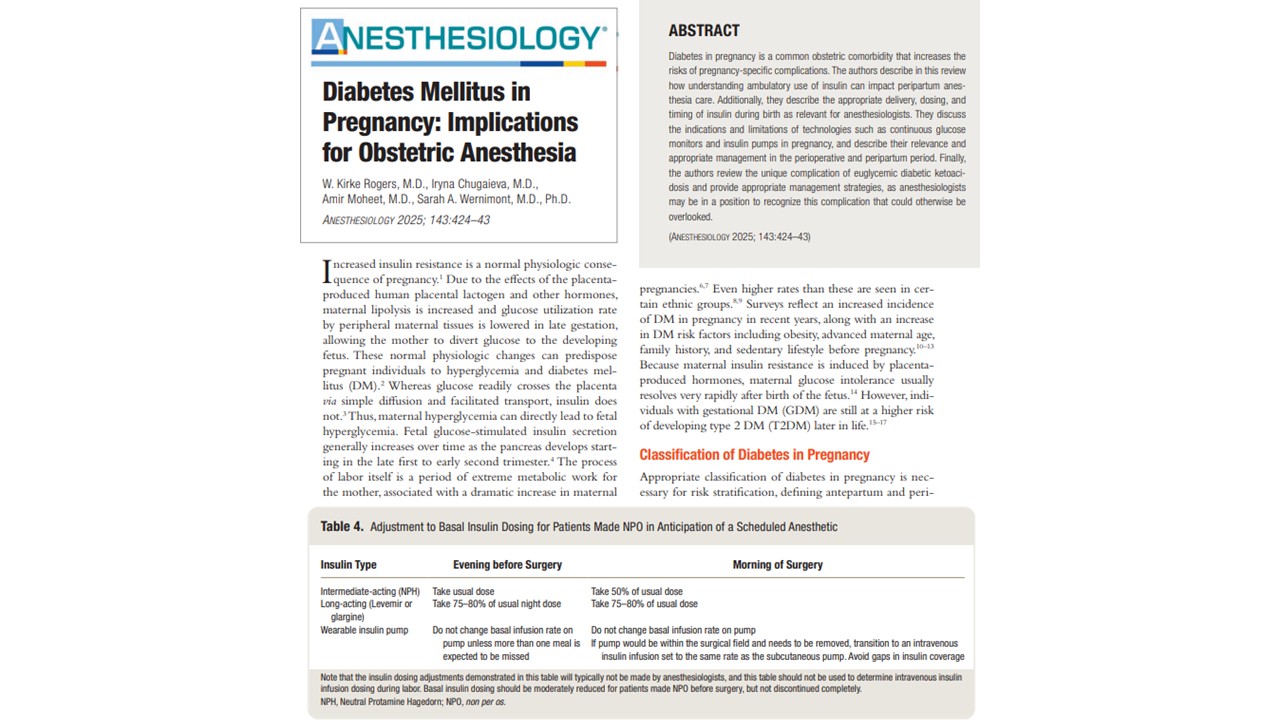
Diabetes mellitus (DM) in pregnancy, whether preexisting (Type 1 or Type 2) or gestational (GDM), is one of the most common comorbidities...
-

Test News Today
Hey this is test news.
-
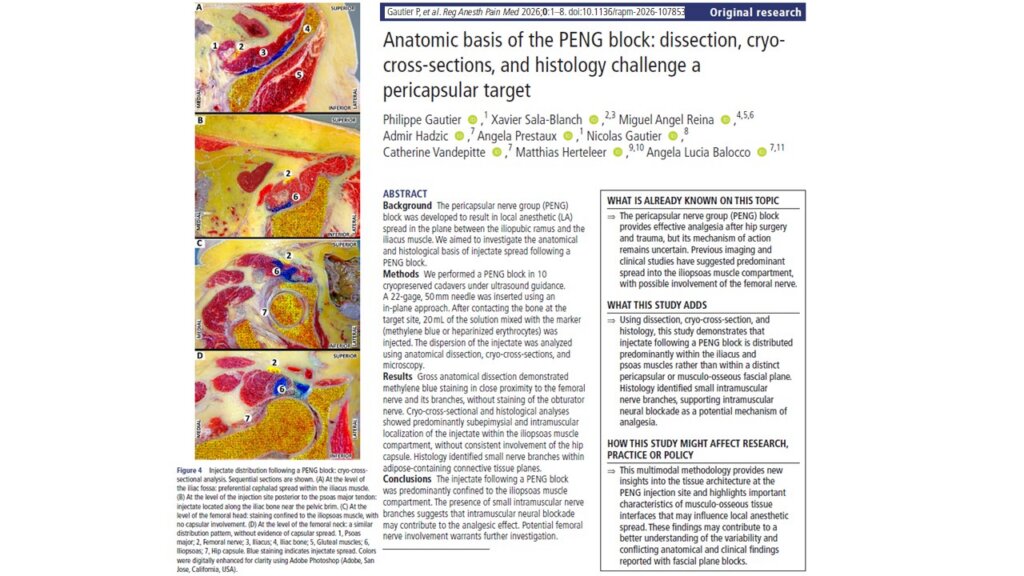
Double vs. single-injection parasternal block: Does greater coverage mean better outcomes?
Double vs single parasternal block: better spread, but no real gains in pain, opioids, or recovery outcomes.
-
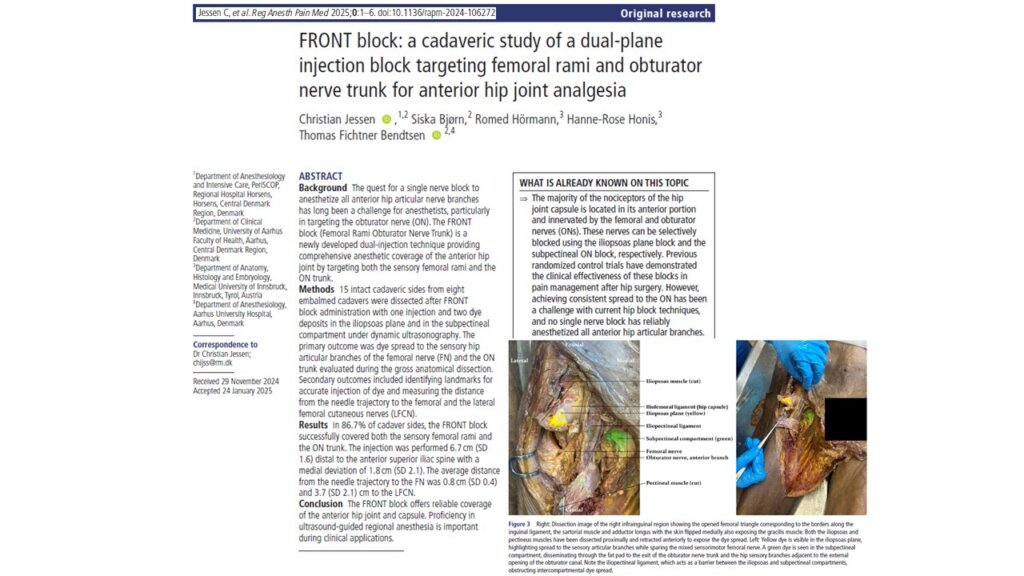
Ultrasound-guided obturator canal block: New anatomical insights for regional anesthesia practice
New anatomical study shows how a proximal obturator canal block may improve ultrasound-guided obturator nerve blockade.
-
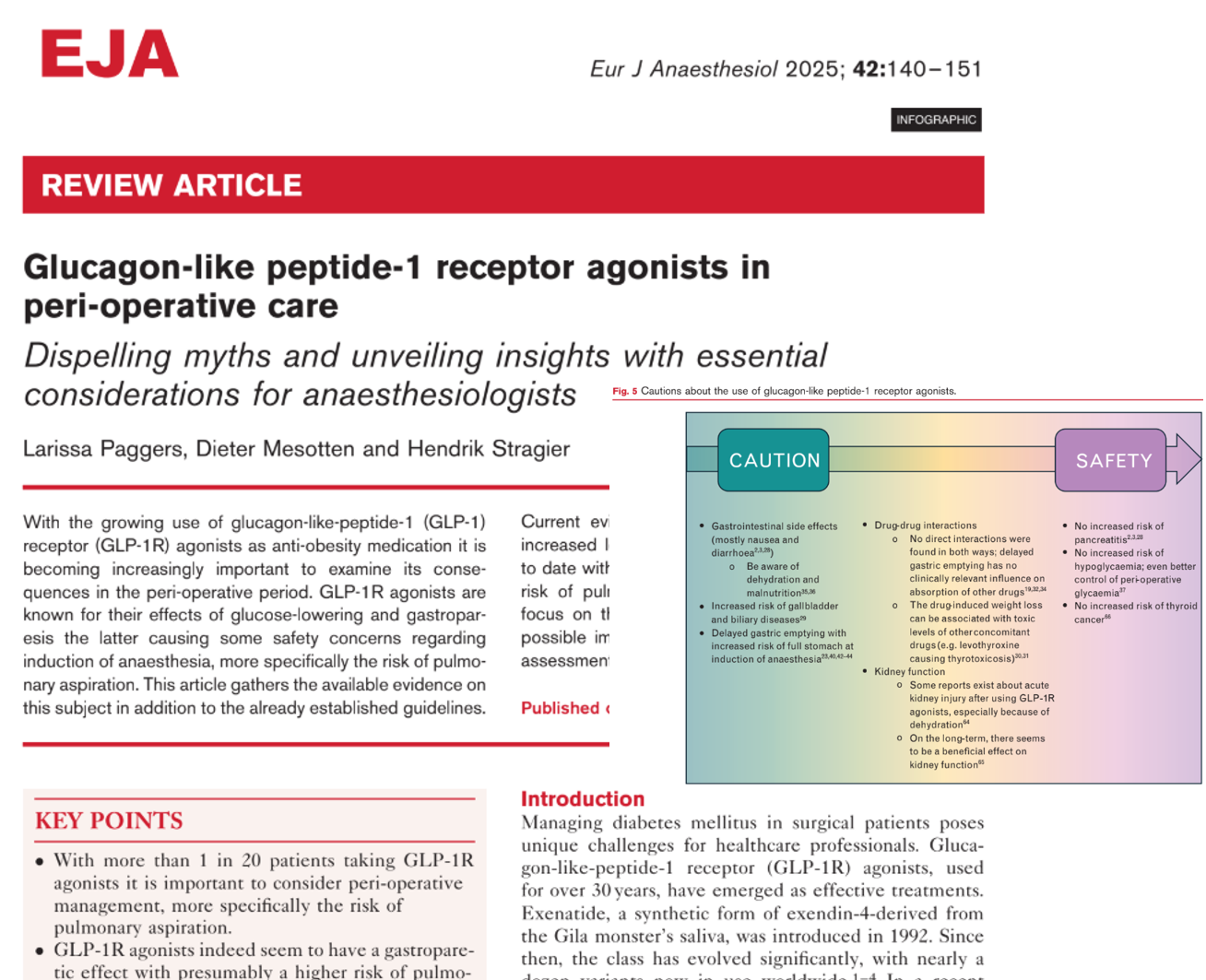
GLP-1 receptor agonists and aspiration risk
GLP-1 receptor agonists are increasingly used for diabetes and weight loss, meaning more surgical patients are taking these drugs. They d...
-
Does the timing of IV dexamethasone really matter?
Does IV dexamethasone timing matter for nerve blocks? New RCT shows flexibility without losing analgesia.
-
Axillary nerve interventions: What anesthesiologists and pain physicians should know
Axillary nerve blocks explained: four key anatomical windows that may improve shoulder pain management.
-
Comparing proximal vs distal ICBN blocks in upper arm AV access surgery: which offers more consistent coverage?
RCT compares proximal vs distal ICBN block for upper arm AV access: improved axillary coverage with proximal approach.
-
Mixing local anesthetics for peripheral nerve blocks: Does it really improve onset?
Does mixing local anesthetics help? New data suggest no faster onset and possibly shorter pain relief.
-
Dermatomal spread in lateral quadratus lumborum vs TAP blocks after laparoscopic colorectal surgery
QL blocks show wider dermatomal spread than TAP blocks after laparoscopic colorectal surgery—but does it improve pain control?
-
Popliteal plexus block + femoral triangle block after TKA: Modest opioid savings with preserved strength
Popliteal plexus + femoral triangle block cut opioids after TKA without weakness. See how this combo performed in RCT data.
-
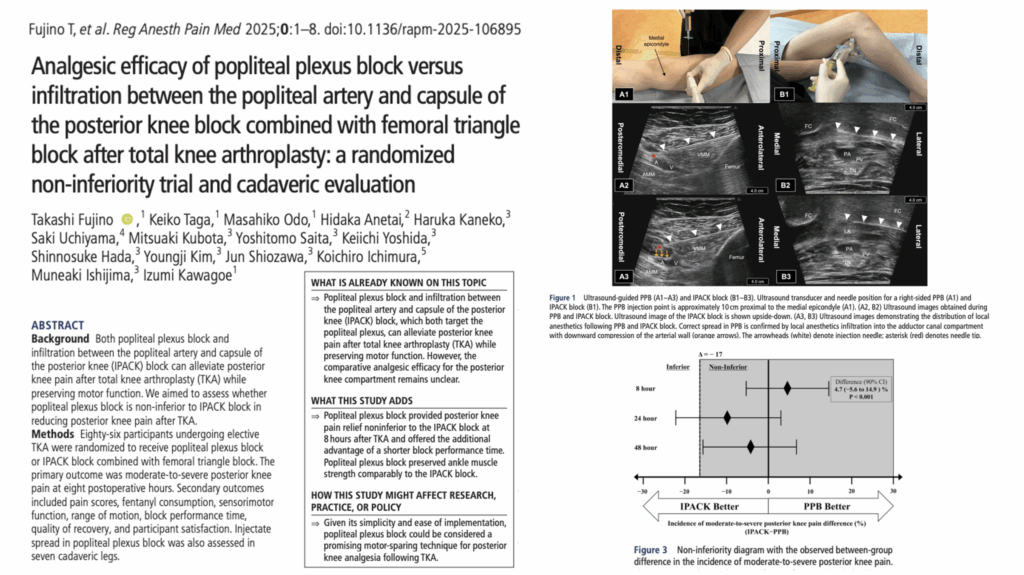
Popliteal plexus block matches IPACK for knee pain relief—with faster, easier setup
A faster block, same pain relief—could PPB replace IPACK in your TKA practice?
-
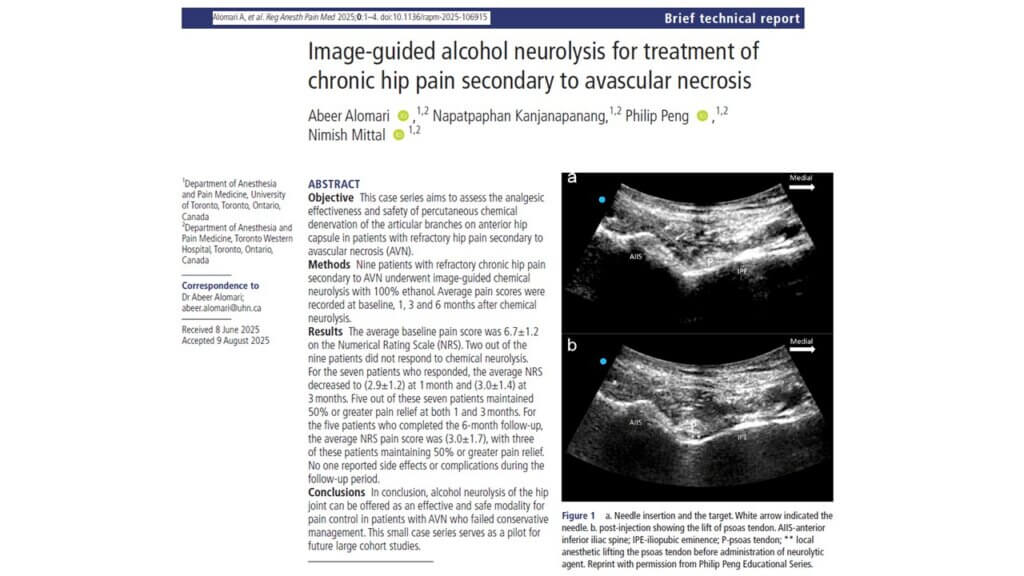
Should we mix local anesthetics for peripheral nerve blocks?
In daily regional anesthesia practice, mixing a long-acting local anesthetic (LA) (e.g., bupivacaine, ropivacaine) with a short-acting LA...
-
Lower volume, lower risk? Balancing analgesia and respiratory impact in interscalene blocks
Find out how 10 mL vs. 20 mL in extrafascial ISB affects diaphragm function, pain control, and opioid use.
-
3D mapping of posterior elbow innervation: Implications for targeted pain interventions
A new 3D map of elbow nerves could unlock targeted pain relief and reshape how we treat chronic joint pain.
-
TAP block + intrathecal fentanyl vs intrathecal morphine for post-cesarean analgesia
Intrathecal morphine remains the standard due to its long-lasting analgesia, but it is frequently associated with pruritus and requires m...
-
Proximal Femoral Fractures in Frail Institutionalized Patients
Proximal femoral fractures, particularly femoral neck and pertrochanteric fractures, are common in frail, elderly, institutionalized pat...
-
Optimising PEEP in ARDS
Positive end-expiratory pressure (PEEP) is a central component of lung-protective ventilation in acute respiratory distress syndrome (ARD...
-
Maternal Peripartum Cardiac Arrest during Anesthetic Care
Maternal cardiac arrest (MCA) is rare but catastrophic and requires immediate coordinated management. Increasing maternal age, obesity, c...
-
Intrathecal Adjuvants for Cesarean Delivery
Cesarean delivery is one of the most commonly performed surgical procedures worldwide. Spinal anesthesia remains the preferred anesthetic...
-
Fascial plane blocks for rib fractures: a new era in trauma analgesia
Fascial plane blocks are emerging as safer, effective alternatives to epidurals for pain control in rib fracture patients.
-
Pain management after elective c-section under neuraxial anesthesia
Cesarean section is one of the most commonly performed surgical procedures worldwide and is frequently associated with moderate-to-severe...
-
Neuraxial vs GA for Geriatric Hip Arthroplasty After Hip Fracture
Hip fractures in older adults are associated with substantial morbidity, mortality, disability, prolonged hospitalization, and major heal...
-
Axillary sensory innervation beyond the intercostobrachial nerve: implications for regional anesthesia in breast surgery
Axillary pain persists despite nerve blocks, suggesting additional sensory pathways beyond the intercostobrachial nerve.
-
Intravenous dexamethasone alone vs combination therapy for prolonging regional block analgesia: what clinicians need to know
Dexamethasone alone vs combo therapy: new trial shows no added benefit of dexmedetomidine in block analgesia.
-
Perioperative management of patients with diabetes mellitus
Approximately one in five surgical patients has diabetes mellitus, and the use of newer antidiabetic medications continues to increase. T...
-
Better together: Parasternal and rectus sheath blocks improve post-sternotomy pain and breathing
Post-sternotomy pain relief: See how adding a rectus sheath block boosts parasternal block performance.